
15 Best HRM Software in Bangladesh: Features & Comparison 2026
Best HR Software in Bangladesh (2026) | Features & Pricing
15 Best HRM Software in Bangladesh
Key Takeaways
- What Is HRM Software?
- Why More Businesses in Bangladesh Are Switching to HR Software
- How We Evaluated the Best HR Management Software in Bangladesh
- 15 Best HRM Software in Bangladesh in 2026
- Essential Modules Every HRM Software Should Have
- Local HR Software vs International HR Software
- How to Choose the Right HRM Software
- Final Recommendation
Introduction
Managing HR with Excel spreadsheets, paper files, attendance registers, and disconnected systems might work when your business has only a small team. But as your workforce grows, these manual processes often create more problems than they solve.
Many businesses in Bangladesh experience the same challenges. Attendance records don't always match payroll calculations. Leave balances require manual adjustments. Employee documents are stored in different locations, making them difficult to find when needed. HR teams spend hours answering routine questions about payslips, attendance corrections, leave requests, and salary calculations, rather than focusing on strategic initiatives.
These issues become even more noticeable as a company expands. Whether you run a growing SME, a manufacturing company, a garment factory, a hospital, or a technology startup, managing employees manually eventually slows operations and increases the risk of costly mistakes.
This is why more organizations are investing in Human Resource Management (HRM) software.
A modern HRM platform integrates all core HR functions into a single, centralized system. Employee records, attendance, payroll, leave management, recruitment, performance tracking, expense management, and reporting are connected through a single dashboard. Instead of relying on multiple spreadsheets or separate applications, HR teams can automate repetitive tasks, improve payroll accuracy, reduce administrative workload, and access real-time workforce insights whenever needed.
Choosing the right HRM software, however, is not simply about selecting the platform with the most features. Every business has different priorities. A garment factory may need advanced shift scheduling and overtime management, while an SME might focus on affordability, payroll automation, and ease of use. Larger enterprises often require multi-branch support, detailed analytics, and integration with existing business systems.
To help you make an informed decision, this guide compares 15 of the best HRM software solutions in Bangladesh for 2026, including both local and international platforms. We'll review their key features, strengths, pricing considerations, and ideal use cases so you can confidently choose the HR software that best fits your organization's needs.
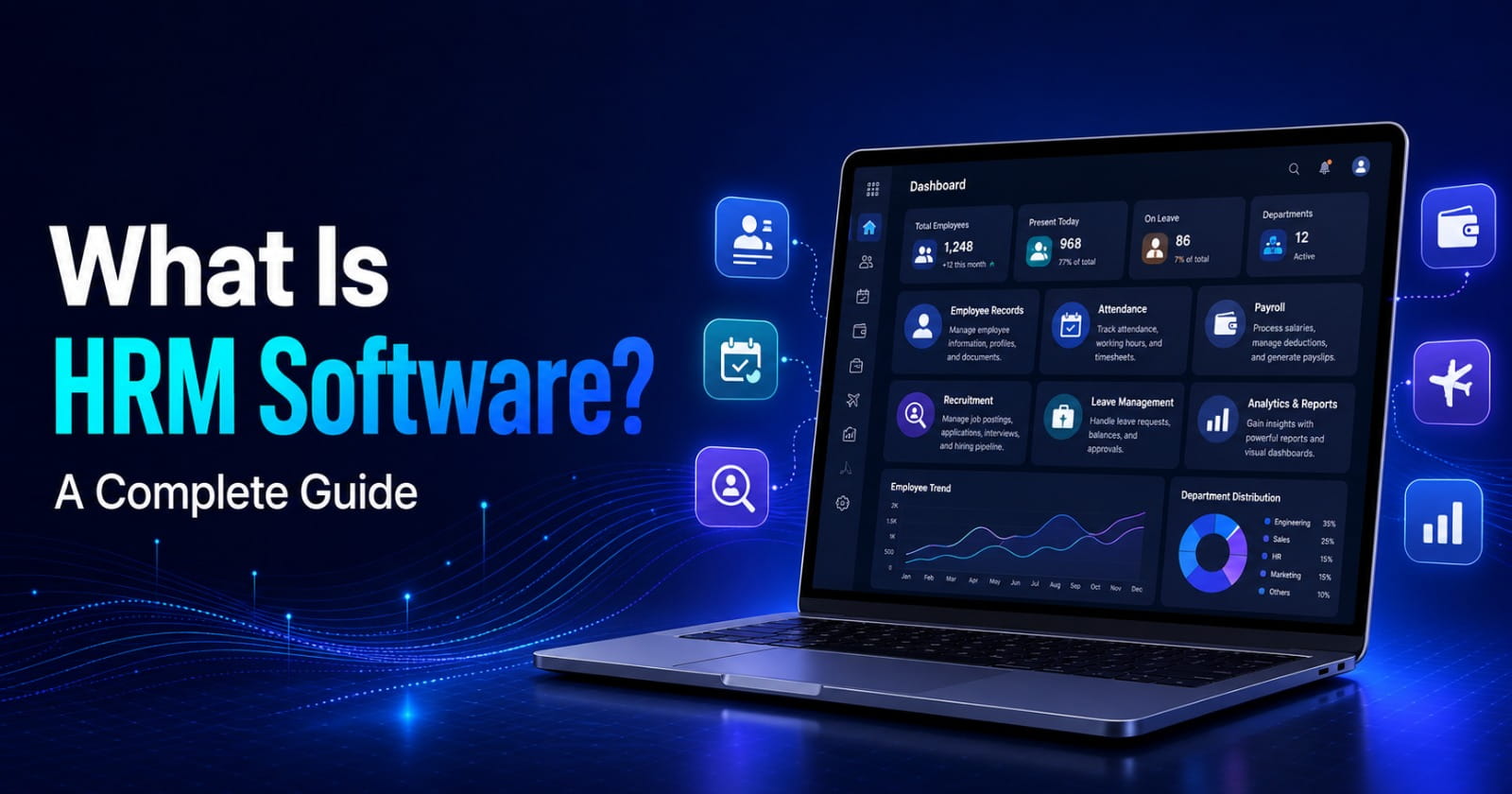
What Is HRM Software?
HR management software, also known as HR software, HRMS, or HRIS (Human Resource Information System), is a centralized platform that helps businesses manage employee information and automate everyday HR operations.
Instead of maintaining multiple Excel spreadsheets, paper files, or disconnected applications, companies can manage their entire workforce from a single system. A modern HRM solution typically includes:
- Employee Records
- Attendance Management
- Leave Management
- Shift & Roster Scheduling
- Payroll Processing
- Recruitment & Hiring
- Employee Onboarding
- Performance Reviews
- KPI & Goal Tracking
- Expense Management
- Employee Training
- HR Reports & Analytics
- Employee Self-Service Requests
The objective is not simply to digitize existing paperwork. A good HRM system should connect information between departments.
For example, approved leave should automatically update attendance. Attendance, overtime, and late records should flow into payroll. A salary revision should update the employee's payroll profile. KPI results should be available during performance reviews.
This connected workflow is what makes an HRM system more valuable than a basic attendance or payroll application.
Why More Businesses in Bangladesh Are Switching to HR Software
More businesses across Bangladesh are replacing spreadsheets and manual HR processes with modern HRM software. From payroll automation and attendance tracking to employee performance and compliance, the right HR solution helps Bangladesh companies save time, reduce errors, and scale with confidence.
1. Manual Payroll Increases Errors and Business Risks
Managing payroll manually may seem manageable for a small team, but as your business grows, the risk of costly mistakes increases, and so does the business impact. Every payroll cycle depends on accurate calculations of basic salary, allowances, overtime, attendance, unpaid leave, bonuses, deductions, income tax, loans, and other adjustments.
A single formula error or incorrect data entry in Excel can result in salary discrepancies, payroll delays, tax miscalculations, and employee dissatisfaction. Modern HRM and payroll software eliminates these risks by integrating employee records, attendance, leave, overtime, and payroll into one centralized system. This reduces manual work, improves payroll accuracy, and ensures employees are paid correctly and on time.
2. Attendance is becoming more complex
Companies now manage office-based employees, field teams, remote workers, multiple branches, and rotating shifts.
A modern attendance system may need to support:
- Biometric devices
- Mobile attendance
- GPS verification
- Geo-fencing
- Selfie check-in
- Multiple shifts
- Grace periods
- Late and early-exit policies
- Overtime calculation
- Attendance regularization
Cloud attendance systems can centralize attendance data and produce reports for payroll, overtime, absence, and working hours.
3. Employee Self-Service Improves Workplace Efficiency
Employees shouldn't have to contact HR every time they need to check a leave balance, download a payslip, update personal information, or submit a request. These routine tasks take valuable time and slow HR operations when handled manually.
An Employee Self-Service (ESS) portal enables employees to complete many of these tasks independently. They can view attendance records, apply for leave, download payslips, update personal details, and track request status from a single portal. This reduces HR teams' administrative workload, improves transparency, and enhances the employee experience.
4. Real-Time HR Analytics Supports Better Business Decisions
Business leaders can't rely on monthly spreadsheets for timely decisions. They need instant access to accurate workforce data that reflects what's happening across the organization today, not weeks later.
A modern HR analytics dashboard provides real-time insights into key workforce metrics, including attendance, absenteeism, workforce strength, turnover rate, recruitment progress, payroll summaries, and performance distribution.
- Current attendance and absenteeism
- Total workforce strength
- Department-wise employee costs
- Employee turnover rate
- Leave trends and balances.
- Recruitment progress
- Payroll summaries
- KPI completion status
- Performance distribution
- Overtime hours and workforce productivity
With real-time HR reporting, managers can identify trends, respond to workforce challenges more quickly, and make informed decisions based on accurate data rather than manual reports.
5. Growing companies need consistent processes
Without a central HR system, different departments may follow different approval rules, attendance policies, and performance review methods.
HRM software creates standardized processes for leave, attendance, payroll, recruitment, expenses, and employee approvals.
How We Evaluated the Best HR Management Software in Bangladesh
The platforms in this article were evaluated using the following criteria:
- Relevance for Bangladeshi organizations
- Breadth of HR and payroll modules
- Attendance and shift capabilities
- Payroll automation
- Employee self-service
- Performance and KPI management
- Mobile access
- Reporting and analytics
- Scalability
- Ease of use
- Local implementation and support
- Ability to connect HR with broader workplace operations
The “best” platform ultimately depends on company size, industry, budget, policies, and technical requirements. Our ranking represents an editorial recommendation based on overall suitability for businesses operating in Bangladesh.
15 Best HRM Software in Bangladesh in 2026
Compare the Top HR Solutions at a Glance
| Rank | HRM software | Best For | Key Features & Strengths | Things to Consider |
| 1 | OrkManza | Large companies, Startups, SMEs, and growing Bangladeshi companies | Connected HR, payroll, attendance, KPI, tasks, meetings, expenses, and workplace modules | Confirm any specialized ERP or accounting integrations during the demo |
| 2 | Zoho People | Companies already using the Zoho ecosystem | HR workflows, attendance, leave, time tracking, mobile applications, and customization | Validate Bangladesh-specific payroll and statutory requirements |
| 3 | PiHR | Medium and large local organizations | Payroll, tax, attendance, leave, shifts, expenses, and employee tracking | Evaluate user experience and required implementation support |
| 4 | AccordHRM | Payroll-focused organizations | Payroll, attendance, PF, gratuity, loans, compliance reporting, and ESS | Some advanced modules are listed as upcoming |
| 5 | PeopleDesk | Organizations managing the complete employee lifecycle | Attendance, leave, payroll, approvals, and employee lifecycle management | Request a detailed module and implementation breakdown |
| 6 | LinesPay | Large organizations, enterprises, and complex payroll environments | Recruitment, payroll, attendance, PF, gratuity, performance, and final settlement | The depth of the system may require a structured implementation |
| 7 | Rysenova | Field teams and mobile workforces | Mobile HR, geo-fencing, attendance, leave, payroll, and employee tracking | Confirm advanced performance and workplace-management requirements |
| 8 | SmartHRM | Small businesses with core HR needs | Employee management, attendance, leave, and payroll with published SME packages | May be better suited to core HR requirements than complex workflows |
| 9 | SystechiHR | Medium and large organizations | Manpower planning, recruitment, payroll, performance, task management, and ESS | Assess configuration effort for complex organizational structures |
| 10 | Jibika Plexus | Factories and companies need customization | Fast payroll, attendance devices, multi-layer approvals, and customizable reports | Implementation and customization requirements should be documented |
| 11 | Kormee | Established organizations requiring core HR administration | ESS, attendance, leave, HR administration, transport bills, and role-based access | Review whether the interface and reporting meet modern usability expectations |
| 12 | BambooHR | Growing international and mid-market businesses | Employee data, payroll, time, benefits, performance, and analytics | Bangladesh payroll and local reporting requirements must be validated |
| 13 | Deel | International and distributed teams | Global HRIS, payroll, contractor management, and international workforce operations | Maybe more than a local-only business needs |
| 14 | Rippling | Companies combining HR, IT, and finance operations | HR, payroll, benefits, recruiting, learning, identity, and device management | Pricing and implementation may be less suitable for smaller local companies |
| 15 | Workday | Large multinational enterprises | Core HR, workforce management, recruiting, talent, learning, analytics, and planning | Generally designed for complex enterprise environments |
Detailed Reviews of the Best HR Software in Bangladesh
1. OrkManza — Best Overall HR Management Software for Growing Businesses in Bangladesh
OrkManza is our top overall recommendation for Bangladeshi startups, SMEs, and growing organizations that want more than a basic payroll and attendance system.
The platform combines 16 connected HR and workplace modules covering employee management, attendance, leave, shift and roster management, approvals, payroll, expenses, task management, meetings, performance, KPIs, analytics, recognition, and support processes.
OrkManza for startups, SMEs, factories, real estate companies, educational institutions, healthcare providers, and growing enterprises, the platform helps organisations replace manual spreadsheets and disconnected systems with a centralised solution. From employee onboarding to payroll processing, attendance tracking, leave management, KPI monitoring, and business analytics, every HR function can be managed from one dashboard.
Key OrkManza modules
- Employee Database
- Employee Self-Service (ESS)
- Attendance Management
- GPS, Selfie & Biometric Attendance
- Leave Management
- Shift & Roster Management
- Payroll Processing
- Income Tax Calculation
- Approval Workflow
- Expense Management
- Recruitment & Onboarding
- Task Management
- Meeting Management
- KPI & Performance Management
- Smart Reports & HR Analytics
- Employee Recognition & Rewards
- Helpdesk & Ticket Management
Why OrkManza ranks first
Many HR products focus primarily on employee records, attendance, and payroll. OrkManza expands beyond core HR by connecting people management with daily workplace execution.
Managers can approve leave and expenses, monitor tasks, review KPI progress, and track team performance. Employees can use web and mobile self-service facilities to manage attendance, leave, payslips, tasks, and workplace updates. Senior management can access combined information covering payroll, attendance, leave, and performance.
This makes OrkManza particularly suitable for companies that do not want to purchase separate systems for:
- HR management
- Attendance
- Payroll
- Performance management
- Task management
- Meeting coordination
- Expenses
- Internal approvals
- Employee support
Best For
OrkManza HR software is particularly well-suited for:
- Startups
- SMEs
- Growing companies
- Multi-department organizations
- Service companies
- Real estate businesses
- Technology companies
- Corporate offices
- Companies replacing Excel-based HR operations
OrkManza's Main Advantage
OrkManza's biggest advantage is its all-in-one HR and Payroll Software for Bangladesh, designed specifically to meet the needs of Bangladeshi businesses. Instead of managing payroll, attendance, leave, employee performance, and daily operations through separate systems, OrkManza integrates everything into a single, centralised platform.
From attendance management and payroll processing to leave management, employee performance tracking, and workplace collaboration, every HR function works together seamlessly. This unified approach helps HR teams reduce manual work, improve accuracy, increase productivity, and make better business decisions.
Contact Info:
Email: hello@orkmanza.com
Call: +8801335102977
Website: https://orkmanza.com/contact-us
2. Zoho People — Best for Companies Using the Zoho Ecosystem
Zoho People is an international cloud HR platform and is a strong option for companies already using Zoho CRM, Zoho Books, Zoho Recruit, Zoho Expense or other Zoho applications because it fits well within the Zoho ecosystem.
The platform supports employee information, attendance, leave, shifts, time tracking, HR workflows and mobile access. Employees can use its mobile applications to apply for leave, record time and clock in or out.
Key Features:
- Mature global software ecosystem
- Configurable HR workflows
- Mobile applications
- Attendance and leave management
- Timesheets
- Employee self-service
- Integration with other Zoho products
Considerations for Bangladeshi companies
Zoho People is a strong HR platform, but companies should confirm how payroll, tax calculation, provident fund, gratuity, and Bangladesh-specific reporting will be handled within the platform.
It may be ideal for companies that already operate within the Zoho ecosystem and have the resources to configure the platform to align with their internal policies.
3. PiHR — Strong Local HR and Payroll Platform
PiHR is a well-known HR and payroll solution in Bangladesh. It offers key local HR and payroll features, including employee management, attendance, shift management, leave, payroll, tax, expenses, employee tracking, task management, digital notices and face-recognition attendance.
Key Features:
- Broad local HR and payroll functionality
- Attendance and shift management
- Tax and payroll features
- Employee tracking
- Expense management
- Digital noticeboard
- Face-recognition attendance
Best suited for
PiHR may be suitable for medium and large organisations that need a locally developed HR and payroll system with a broad range of administrative features.
Companies should compare their user experience, reporting, implementation process, and customization capabilities with those of newer platforms before making a final decision.
4. AccordHRM — Strong for Payroll, Funds, and Compliance Reporting
AccordHRM provides employee management, attendance, leave, shifts, automated payroll, loans and advances, compliance reporting, provident fund, gratuity fund, and employee self-service.
Key Features:
- Payroll processing
- Leave and attendance
- Shift and roster management
- Loans and salary advances
- Provident fund
- Gratuity fund
- Compliance reporting
- Employee Self-Service
AccordHRM is a practical option for companies where payroll, attendance, loans, and employee fund management are the main priorities.
Organizations requiring advanced performance appraisal, expense management, or broader workplace management should verify whether those modules are currently available, as some are presented by the vendor as upcoming features.
5. PeopleDesk — Best for Employee Lifecycle and Approval Management
PeopleDesk is a cloud HR platform that provides employee information, attendance, leave, payroll, and HR processes that require approval. Its product positioning focuses on consolidating routine employee lifecycle activities into a single, connected system.
The platform has also been adopted by established organizations in Bangladesh, including The Daily Star, as part of a phase of its HR digital-transformation initiative.
Key Features:
- Employee lifecycle management
- Attendance
- Leave
- Payroll
- Approval workflows
- Employee records
- Mobile access
- HR document processes
Best suited for
PeopleDesk may suit medium and large organizations that require structured employee approvals and lifecycle management.
Before implementation, buyers should request a detailed feature matrix covering payroll rules, attendance devices, KPI management, recruitment, reporting, and integrations.
6. LinesPay — Best for Complex and Enterprise HR Operations
LinesPay is an established HR and payroll platform offering recruitment, onboarding, employee management, attendance, leave, task management, payroll, provident fund, gratuity, performance appraisal, disciplinary action, final settlement, and exit clearance.
Key Features:
- Comprehensive employee lifecycle
- Recruitment and onboarding
- Complex payroll processing
- PF and gratuity
- Performance appraisal
- Disciplinary management
- Exit and final settlement
- Employee Self-Service
- Mobile access
Best suited for
LinesPay may be particularly relevant for:
- Large companies
- Enterprises
- RMG and manufacturing businesses
- Organizations with complex salary structures
- Companies requiring formal employee separation workflows
Its extensive functionality can be an advantage, although companies should plan for proper configuration, training, and implementation.
7. Rysenova — Best for Mobile and Field Attendance
Rysenova, sometimes incorrectly written as Rizenova, is a Bangladeshi HR and payroll platform focused on attendance, leave, payroll, employee tracking, and mobile workforce management.
Its public product information emphasizes mobile attendance, biometric integration, GPS verification, geo-fencing, and workforce tracking.
Key Features:
- GPS attendance
- Geo-fencing
- Mobile check-in
- Biometric attendance integration
- Leave management
- Payroll
- Shift management
- Employee tracking
Best suited for
- Sales teams
- Field-force operations
- Healthcare field workers
- Retail outlets
- Distribution businesses
- Multi-location organizations
Companies that need advanced recruitment, KPI, meeting, task, or employee-engagement functionality should verify the availability and depth of those modules.
8. SmartHRM — Affordable Option for Core HR Requirements
SmartHRM provides employee management, attendance, leave, and payroll capabilities. The vendor also offers monthly subscription packages for companies of different sizes, including ones aimed at SMEs.
Key Features:
- Core employee management
- Attendance
- Leave
- Payroll
- Payslips and bank sheets
- Late deduction
- Packages for small businesses
Best suited for
SmartHRM is a viable option for small businesses that need essential HR and payroll automation without a large number of advanced modules.
Companies expecting rapid growth should compare their reporting, workflow automation, recruitment, KPIs, mobile, and integration capabilities with those of more comprehensive platforms.
9. SystechiHR — Best for Structured HR Automation
SystechiHR provides manpower planning, recruitment, employee information, leave, payroll, performance, task management, employee self-service, and mobile access.
Key Features:
- Manpower planning and budgeting
- Recruitment
- Payroll
- Performance management
- Task management
- Employee Self-Service
- Mobile application
- Employee information management
Best suited for
SystechiHR is suitable for established medium- and large-sized organizations with structured HR processes across multiple departments.
Businesses should evaluate configuration requirements, reporting flexibility, implementation timeline, and integration options.
10. Jibika Plexus — Best for Payroll Customization and Compliance Documents
Jibika Plexus focuses on customizable HR and payroll operations. Its product information highlights fast attendance and payroll processing, attendance-device integration, internal auditing, transaction history, multiple approval layers, custom reports, and configurable compliance documentation.
Key Features:
- Fast attendance processing
- Payroll generation
- Attendance-device integration
- Multi-layer approvals
- Custom reports
- Internal audit trails
- Performance appraisal
- Custom compliance documents
- Mobile-responsive access
Best suited for
Jibika Plexus may be appropriate for factories, RMG companies, and organizations that require significant customization around payroll and compliance documentation.
The implementation scope should be carefully documented to avoid confusion about customization, migration, reports, and post-launch support.
11. Kormee — Established Core HR Administration System
Kormee provides employee self-service, attendance and leave management, HR administration, out-of-office applications, manual attendance tracking, transport bill management, and role-based access.
Key Features:
- Employee Self-Service
- Attendance and leave
- HR administration
- Transport-bill processes
- Role-based access
- Mobile access
Best suited for
Kormee may suit established organizations seeking traditional HR administration and employee service functionality.
Prospective buyers should assess interface usability, analytics, mobile experience, payroll configuration, and integration requirements during the demonstration.
12. BambooHR — Best for Growing International Businesses
BambooHR combines employee information, payroll, time, benefits, performance, and analytics into a single, connected HR platform. The company positions the system primarily for growing and mid-market businesses.
Key Features:
- Growing international companies
- Mid-market organizations
- Companies prioritizing employee experience
- Teams needing strong core HR and reporting
Bangladeshi companies should verify how local payroll, tax, attendance devices, and compliance reports would be managed.
13. Deel — Best for Global Employment and Distributed Teams
Deel is designed for organizations that hire and manage employees and contractors across multiple countries. Its platform includes HRIS, global payroll, Employer of Record services, contractor management, time off, approvals, and workforce data.
Key Features:
- Remote-first companies
- International hiring
- Contractor management
- Global payroll
- Companies without legal entities in every hiring country
For a company employing only local Bangladeshi staff, Deel may provide more global infrastructure than necessary.
14. Rippling — Best for Connecting HR, IT, and Finance
Rippling combines HR, payroll, benefits, recruiting, performance, and learning with IT identity, application, and device management.
Key Features:
- Technology companies
- Global workforces
- Companies needing device and access management
- Businesses integrating HR with IT and finance
Its broad platform can be powerful, but local companies should assess pricing, implementation complexity, and Bangladesh-specific payroll requirements.
15. Workday — Best for Large Multinational Enterprises
Workday Human Capital Management provides core HR, workforce management, recruiting, talent, learning, skills, automation, and analytics. It is primarily designed for large, complex enterprise environments.
Key Features:
- Large enterprises
- Multinational corporations
- Complex organizational structures
- Strategic workforce planning
- Global talent management
Workday may be excessive for most Bangladeshi SMEs due to implementation, cost, and governance requirements typically associated with enterprise HCM systems.
Why OrkManza Is Our Best Overall Choice
Several platforms on this list offer robust attendance, payroll, and employee management features. OrkManza receives our overall recommendation because it addresses three important requirements together.
1. It is designed for Bangladeshi businesses
Local companies need configurable attendance, shifts, overtime, leave, payroll, tax, employee funds, and approval processes.
OrkManza offers packages that cover core HR, automated payroll, tax calculations, provident fund, gratuity, and broader workplace management requirements.
2. It goes beyond traditional HR administration
Most companies do not manage people in isolation. Employee attendance affects payroll. Tasks affect performance. Meetings create follow-up actions. Expenses require approvals. Employee support requires ticket management.
OrkManza brings HR, payroll, tasks, meetings, KPIs, expenses, approvals, analytics, and employee support into one environment.
3. It serves employees, managers, HR, and senior leadership
A complete HR platform should provide different experiences for different users.
With OrkManza:
- Employees can manage attendance, leave, payslips, requests, and tasks.
- Managers can handle approvals, projects, and team performance.
- HR can manage employee records, policies, payroll, and reports.
- Finance can monitor payroll and employee expenses.
- Senior management can review workforce and performance analytics.
This broader organizational coverage is a major reason OrkManza stands out among the best HR software in Bangladesh.
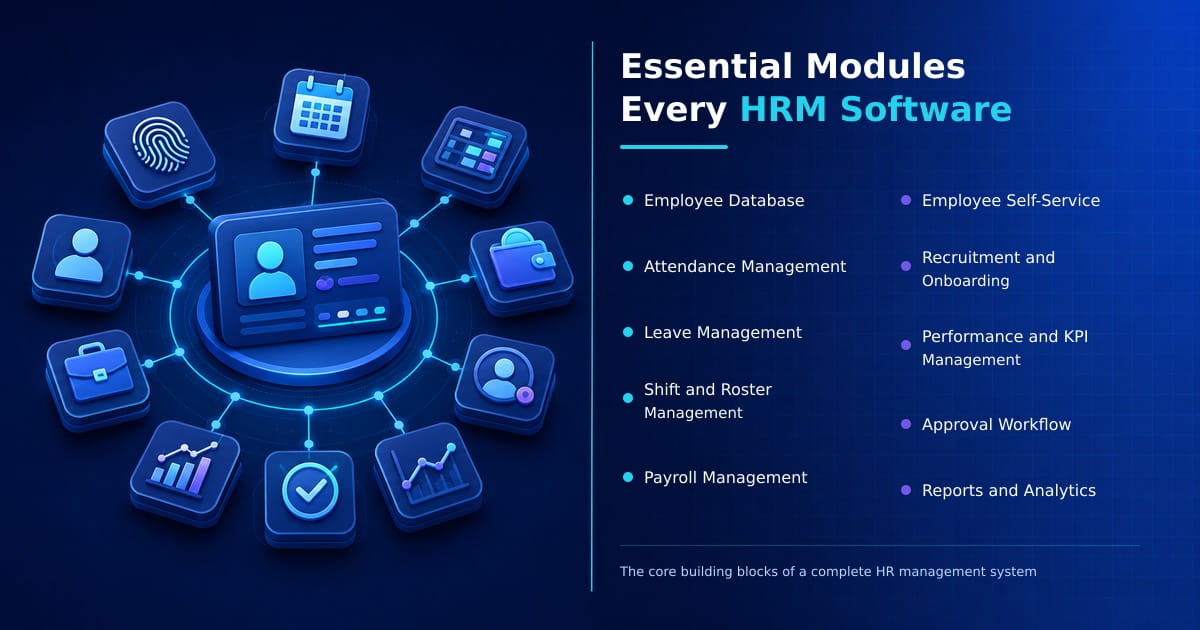
Essential Modules Every HRM Software Should Have
Employee Database
The platform should maintain a secure digital profile for every employee, including:
- Employment information
- Department and designation
- Reporting manager
- Salary history
- Documents
- Contracts
- Emergency contacts
- Assets
- Promotions and transfers
- Disciplinary records
- Training history
Attendance Management
A robust attendance module should support multiple attendance methods rather than forcing every company to use a single fixed system.
Look for:
- Biometric-device integration
- GPS attendance
- Selfie attendance
- Geo-fencing
- Web or kiosk attendance
- Late and early-exit rules
- Grace periods
- Missing-punch correction
- Overtime
- Outdoor duty
- Attendance approvals
- Real-time dashboards
Leave Management
The leave module should support:
- Multiple leave types
- Leave accrual
- Carry-forward rules
- Probation policies
- Paid and unpaid leave
- Leave encashment
- Multi-level approval
- Holiday calendars
- Leave balances
- Team availability calendar
- Payroll synchronization
Shift and Roster Management
This is especially important for hospitals, factories, retail businesses, security services, and customer-support teams.
The software should allow:
- Fixed shifts
- Rotating shifts
- Flexible shifts
- Overnight shifts
- Weekly rosters
- Department-based schedules
- Employee-based assignments
- Shift swaps
- Rest days
- Automatic attendance-policy assignment
Payroll Management
Payroll should connect directly with attendance, leave, and employee salary information.
Important capabilities include:
- Salary structures
- Allowances
- Overtime
- Bonuses
- Incentives
- Late deductions
- Unpaid leave
- Arrears
- Loans and advances
- Tax calculation
- Provident fund
- Gratuity
- Final settlement
- Payslips
- Bank advice
- Payroll approval
- Payroll reports
Employee Self-Service
Employees should be able to:
- Check attendance
- Apply for leave
- Download payslips
- Submit expenses
- Update selected information
- Request documents
- Check approval status
- View company notices
- Access policies
- Complete assigned tasks
Recruitment and Onboarding
The recruitment module should ideally cover:
- Job requisitions
- Job publishing
- Candidate database
- Candidate filtering
- Interview scheduling
- Interview evaluation
- Offer management
- Hiring approval
- Onboarding checklists
- Document collection
- Probation tracking
Performance and KPI Management
A useful performance system should support continuous tracking rather than relying solely on an annual appraisal form.
Look for:
- Departmental KPIs
- Individual KPIs
- Weighted targets
- Progress updates
- Manager reviews
- Self-assessment
- Competency evaluation
- Performance cycles
- Ratings
- Feedback
- Improvement plans
- Performance analytics
Approval Workflow
Companies should be able to configure different approval chains for different departments, locations, or employee levels.
Common approval processes include:
- Leave
- Attendance correction
- Expenses
- Loans
- Salary revisions
- Recruitment
- Overtime
- Travel
- Training
- Employee documents
Reports and Analytics
At a minimum, the system should provide reports for:
- Headcount
- Attendance
- Late arrival
- Absence
- Overtime
- Leave
- Payroll
- Recruitment
- Employee turnover
- Performance
- Department costs
- Employee movements
- Expenses
- Workforce trends
Local HR Software vs International HR Software
Choose local HRM software when:
- Most employees are based in Bangladesh
- You require local implementation support
- Payroll and attendance are primary requirements
- You use Bangladesh-specific salary and leave policies
- You need biometric device integration
- Your HR team prefers local training and support
- You require local customization
- Your budget is designed for an SME or local enterprise
Choose international HRM software when:
- Employees are located in several countries
- You manage international contractors
- You require Employer of Record services
- You already use a global software ecosystem
- Your company has a dedicated HR technology team
- Global compliance and payroll are major priorities
- You need advanced enterprise workforce planning
For many Bangladeshi SMEs, a local cloud platform is generally easier to configure, implement, and support. Multinational and globally distributed companies may benefit from international platforms, provided local requirements are properly validated.
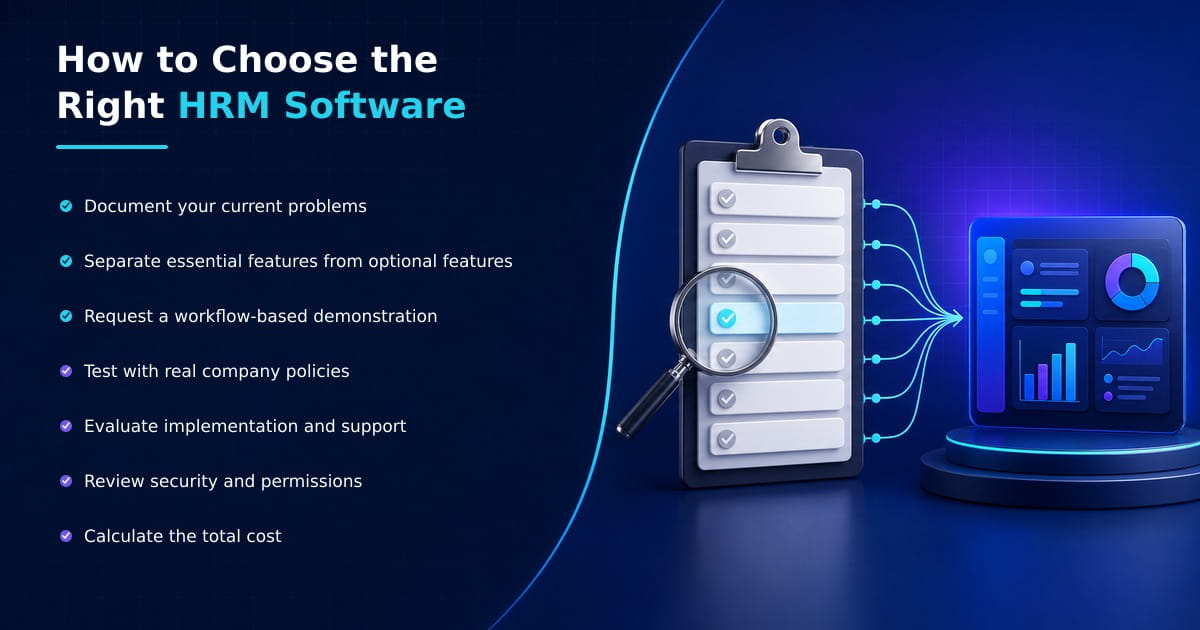
How to Choose the Right HRM Software
1. Document your current problems
Do not begin with a long list of software features. Begin with the operational problems you need to solve.
Examples include:
- Payroll takes too long
- Attendance data is unreliable
- Employees cannot check their own records
- Managers delay approvals
- Leave balances are incorrect
- HR information is scattered
- Recruitment is difficult to track
- Management lacks workforce reports
- Performance reviews are inconsistent
2. Separate essential features from optional features
Create three categories:
Must have: Features required from the first day.
Should have: Features required within the next 6–12 months.
Future requirement: Features that may be useful as the company grows.
This prevents the organization from buying an unnecessarily complex system or selecting a basic platform that it will outgrow quickly.
3. Request a workflow-based demonstration
Do not accept a demonstration that only shows dashboards.
Ask the vendor to demonstrate complete workflows, such as:
- Employee clocks in.
- Attendance is recorded.
- Employee applies for leave.
- Manager approves the request.
- Attendance and leave flow into payroll.
- Payroll is processed.
- Employee receives a payslip.
- Management views the payroll report.
This reveals whether the modules are genuinely connected.
4. Test with real company policies
Provide the vendor with sample policies covering:
- Attendance
- Grace periods
- Overtime
- Leave
- Shifts
- Salary
- Tax
- Bonuses
- Loans
- Provident fund
- Gratuity
- Approval levels
Ask the vendor to configure and demonstrate them.
5. Evaluate implementation and support
A good product can still fail if the implementation is poor.
Ask about:
- Data migration
- Attendance-device integration
- Configuration
- Training
- Support channels
- Response times
- Dedicated account management
- Custom reports
- System updates
- Backup and recovery
- Exit and data-export procedures
6. Review security and permissions
HR systems contain highly sensitive employee and salary information.
The platform should provide:
- Role-based permissions
- Restricted salary access
- Activity logs
- Secure cloud hosting
- Regular backups
- Password controls
- Data export
- Employee-level access restrictions
- Approval histories
7. Calculate the total cost
Do not compare only the monthly subscription.
Also calculate:
- Setup cost
- Data migration cost
- Device-integration cost
- Training cost
- Customization cost
- Mobile application charges
- Report-development charges
- Annual support charges
- Upgrade costs
- Costs for additional modules
Final Recommendation
There is no single HRM system that is automatically right for every business.
Zoho People is a strong option for companies already using Zoho products. PiHR, AccordHRM, PeopleDesk, LinesPay, Rysenova, SmartHRM, SystechiHR, Jibika Plexus, and Kormee each address different areas of the Bangladeshi HR and payroll market.
BambooHR, Deel, Rippling, and Workday are valuable international options for businesses with global or enterprise requirements.
However, for Bangladeshi startups, SMEs, and growing organizations seeking HR, payroll, attendance, employee self-service, KPIs, tasks, meetings, approvals, and workplace operations in a single connected platform, OrkManza is our best overall recommendation.
Its key strength is not merely the number of modules. It is the way those modules connect employee information, payroll, attendance, performance, and daily work into a single system. Ready to Replace Manual HR Processes? Act now to modernize your HR and workplace operations.s?
Stop managing employee information, attendance, payroll, leave, and performance across disconnected spreadsheets and applications.
With OrkManza, your employees, managers, HR team, finance department, and senior management can work through one connected HR and workplace platform.
Book an OrkManza demo and discover how your organization can automate HR, reduce manual work, and manage employees more effectively.
Explore More Articles on the OrkManza Blog and Stay Updated with the Latest HR Trends.
HR Software vs Excel in Bangladesh: Which Is Better for Business in 2026?
How OrkManza HRM Software Helps Manage Remote and Field Employees in Bangladesh
Biometric vs. Mobile GPS Attendance: Which is Right for Your Business in Bangladesh?
Try Orkmanza for Free
Automate HR, attendance, payroll, tasks and more. Track all your key metrics in one powerful platform.