
How to Choose the Best HR Software for Small Business in BD
Best HR Software for Small Business
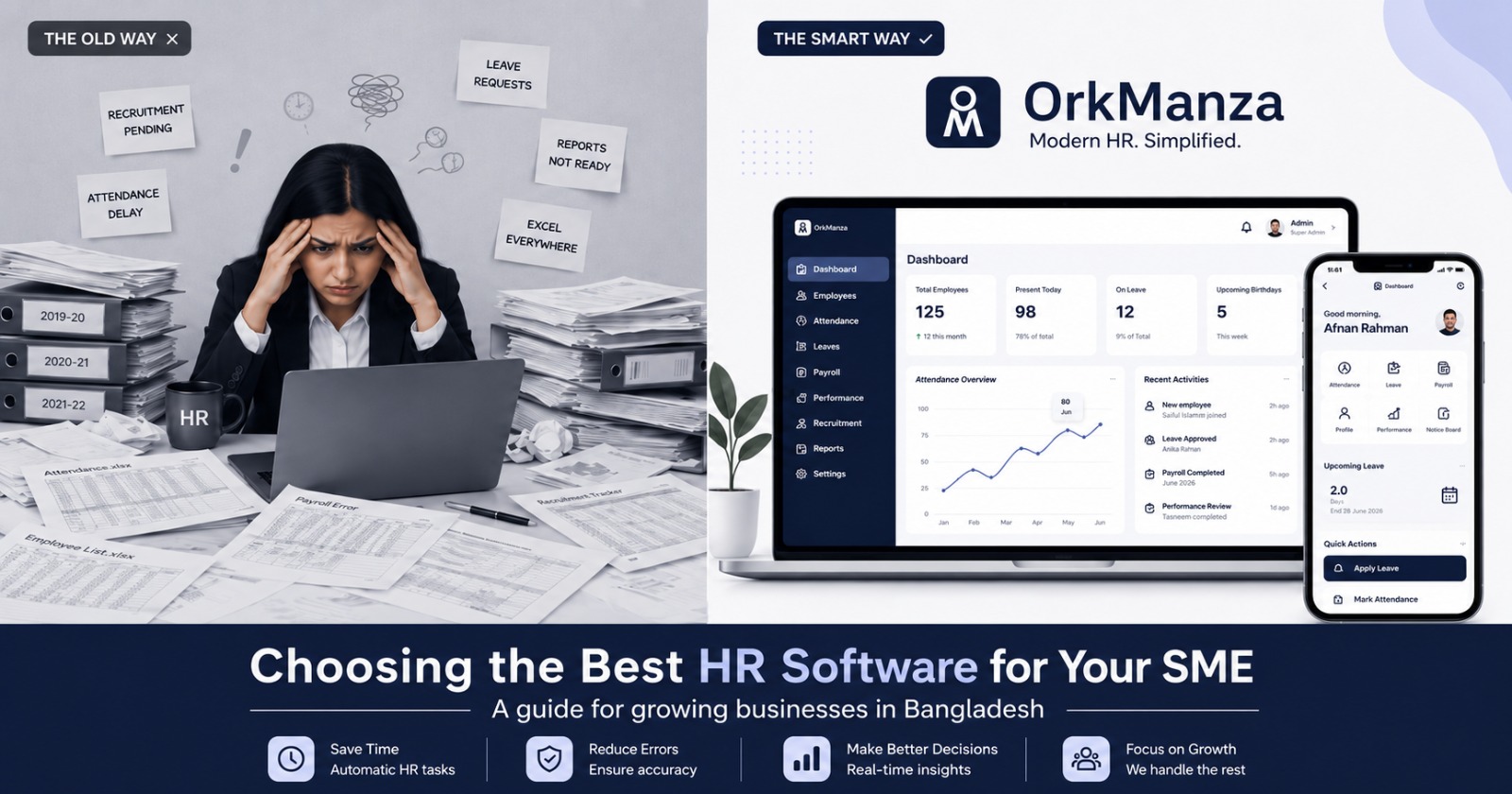
Best HR and Payroll Software for SMEs
Key Takeaways
- Introduction:
- Why SMEs in Bangladesh Need HR Software
- Common Problems SMEs Face Without HR Software
- What Makes Great HR Software?
- HR Software Checklist Before Buying
- How Much Does HR Software Cost?
- Every SME Should Ask Before Buying HR Software
- Why OrkManza HRMS Is Built for Bangladeshi SMEs
- Conclusion
Introduction:
If you're running a small or medium-sized business in Bangladesh, you've probably experienced at least one of these situations:
- Payroll takes two or three days every month.
- Employee attendance doesn't match the biometric machine.
- Leave balances are tracked in Excel and are often incorrect.
- Overtime calculations lead to employee complaints.
- HR staff spend hours preparing salary sheets instead of focusing on people.
These challenges are common across SMEs in Bangladesh. Many businesses still rely on Excel spreadsheets, paper attendance registers, or disconnected software to manage their workforce. While these methods may work for a team of 10 employees, they quickly become inefficient as your company grows to 20, 50, or even 100 employees.
A single payroll error can reduce employee trust. Incorrect overtime calculations can increase labour disputes. Missing attendance records can delay salary processing. Over time, these small issues affect productivity, compliance, and business growth.
This is why more companies are seeking the best HRM software for small businesses in Bangladesh. Modern HR software automates repetitive tasks, minimises human error, and enables business owners to make decisions with real-time HR data.
Whether you operate a startup in Dhaka, a retail chain in Chattogram, a garment factory in Gazipur, a hospital, or an educational institution, the right HR software for SME Bangladesh can simplify daily operations while helping your business stay organised and compliant.
In this guide, you'll learn how to evaluate HR software, what features matter most, the common mistakes to avoid, and how to choose a solution that fits your business today and continues to support your growth in the years ahead.
Why SMEs in Bangladesh Need HR Software in 2026
Five years ago, a 15-person company could survive on Excel. A 50-person company today usually can't not because the headcount math is different, but because the expectations are. Employees want to check their own payslips on their phones. Owners want to see attendance trends without having to ask HR to pull a report. Auditors and buyers (especially in garment and export-facing businesses) want documented, defensible HR records, not a folder of spreadsheets that only one person can understand.
This is the real shift happening across Bangladeshi SMEs right now: HR is moving from "a task someone does at month-end" to "a system that runs quietly in the background." Digital transformation isn't a buzzword here; it's what happens when a company that used to have 12 employees now has 80, spread across two shifts and maybe a second location, and the person who used to remember everything in their head simply can't anymore.
The businesses making this shift early aren't necessarily the biggest ones. They're the ones who got tired of surprises.
Common Problems SMEs Face Without HR Software
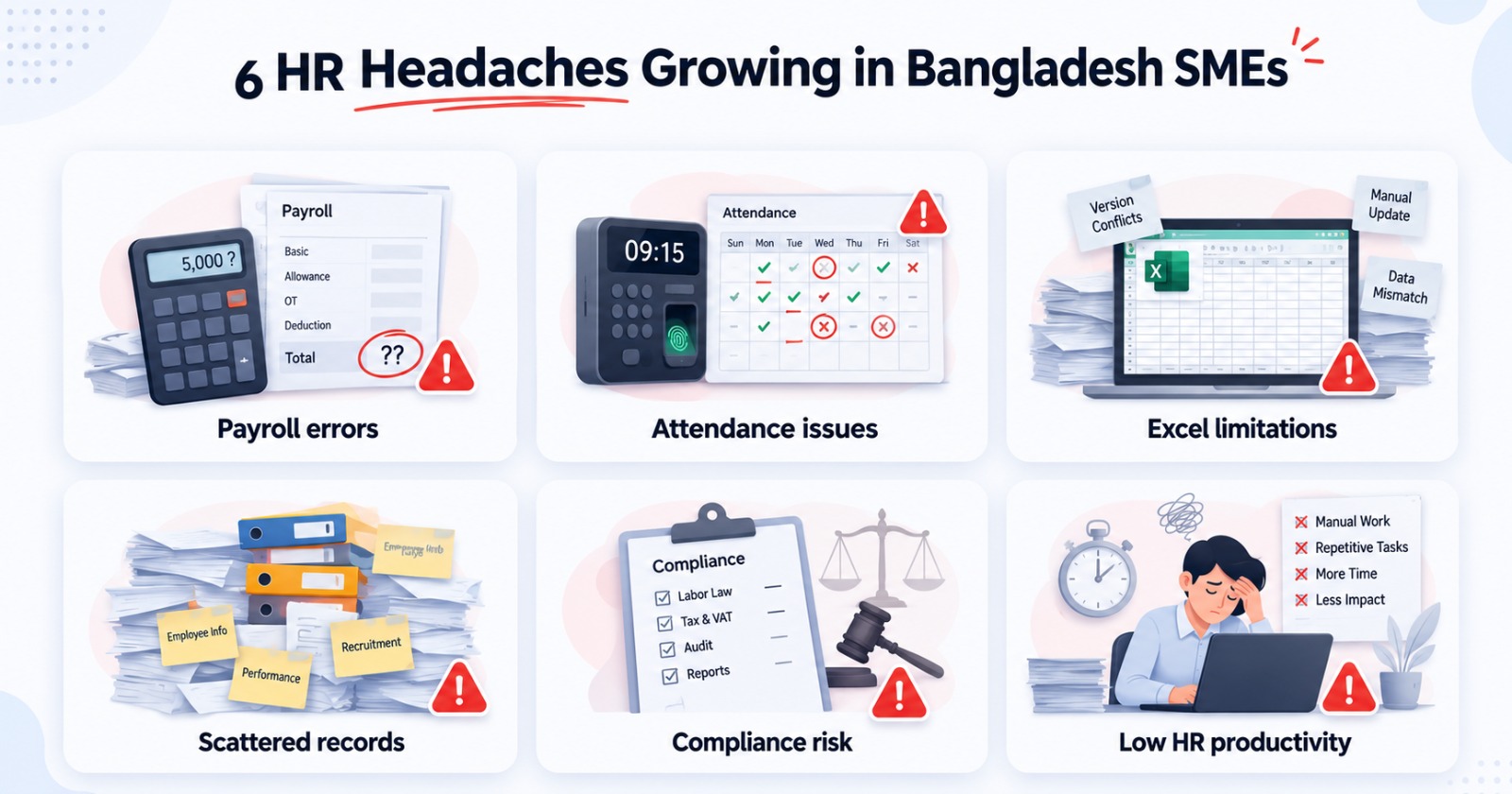
As your business grows, managing HR with Excel and manual processes becomes increasingly difficult. Many SMEs in Bangladesh face the same challenges.
- Payroll Errors: Manual salary calculations can lead to errors in overtime, leave deductions, bonuses, and payroll processing.
- Attendance Issues: Managing fingerprint or face recognition data manually often leads to inaccurate attendance records and delayed payroll.
- Excel Limitations: Broken formulas, duplicate records, and outdated spreadsheets make HR management unreliable.
- Scattered Employee Records: Employee documents and information are stored across multiple files, making them difficult to access.
- Compliance Challenges: Manual HR processes make it harder to maintain accurate records for overtime, leave, and payroll under the Bangladesh Labour Act.
- Low HR Productivity: HR teams spend too much time on administrative tasks rather than on recruitment, employee engagement, and business growth.
If these challenges sound familiar, it's a clear sign that your business has outgrown manual HR management. A modern HR software for SMEs in Bangladesh can automate payroll, attendance, leave management, and employee records, helping your business save time, reduce errors, and improve efficiency.
What Makes Great HR Software?
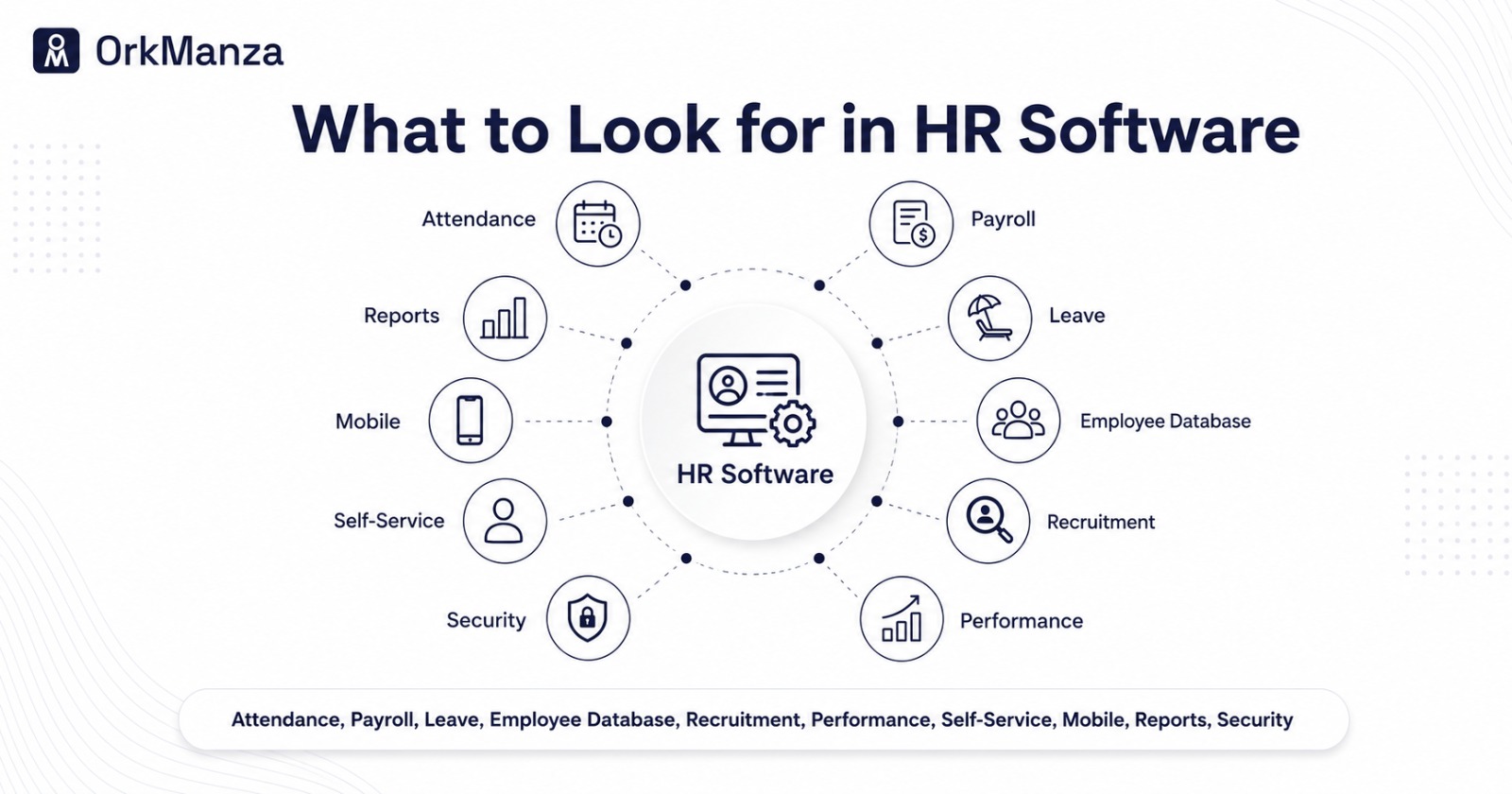
Not every HR software offers the same value. Some solutions only manage attendance, while others focus solely on payroll. Growing businesses benefit most from a comprehensive HR platform that integrates all HR functions into a single system.
When evaluating the best HR software for small businesses in Bangladesh, look for software that includes the following essential features.
Attendance Management
An effective HR system should support:
- Fingerprint devices
- Face recognition
- Mobile attendance
- GPS attendance
- Shift scheduling
- Overtime tracking
- Late arrival reports
Attendance data should automatically sync with payroll, eliminating duplicate data entry.
Automated Payroll
Payroll should handle more than basic salary calculations.
A complete payroll module should support:
- Basic salary
- Overtime
- Bonuses
- Allowances
- Leave deductions
- Tax calculations
- Payslip generation
- Bank transfer reports
Automation helps HR teams complete payroll in hours instead of days.
Leave Management
Employees should be able to:
- Apply for leave online.
- Track leave balances
- Receive approval notifications
- View leave history
Managers should approve leave through a structured workflow without relying on emails or messaging apps.
Employee Database
Every employee should have a secure digital profile containing:
- Personal information
- Employment history
- Salary records
- Documents
- Bank information
- Emergency contacts
- Educational qualifications
This reduces paperwork and makes information easy to access when needed.
Recruitment Management
Hiring becomes easier when HR software supports:
- Job postings
- Applicant tracking
- Interview scheduling
- Candidate evaluation
- Hiring status monitoring
Instead of managing recruitment via email and spreadsheets, HR teams can oversee the entire hiring process from a single platform.
Performance Management
Growing businesses need structured employee evaluations.
Look for software that includes:
- KPI tracking
- Performance reviews
- Goal management
- Manager feedback
- Employee evaluations
This helps organisations improve employee productivity while identifying future leaders.
Employee Self-Service Portal
Employees appreciate having direct access to their own information.
Self-service features typically include:
- Downloading payslips
- Viewing attendance
- Checking leave balances
- Updating personal details
- Applying for leave
This reduces routine HR inquiries and improves the employee experience.
Mobile Accessibility
Today's workforce expects mobile access.
A modern HR system should allow employees and managers to:
- Mark attendance
- Approve leave
- View reports
- Access employee information
- Receive notifications
from anywhere.
Reporting & Analytics
Good HR software should provide actionable insights through reports such as:
- Attendance reports
- Payroll summaries
- Leave reports
- Overtime analysis
- Department-wise employee reports
- Salary reports
- Workforce analytics
These reports support better workforce planning and business decisions.
Security & Scalability
HR software stores sensitive employee information, making security a top priority.
Look for features such as:
- Role-based access
- Cloud backup
- Data encryption
- Activity logs
- Secure login
- Regular system updates
The software should also scale with your business, whether you have 20 employees today or 500 in the future.
HR Software Checklist Before Buying
Before you sign up for anything, run through this list. It's the same one we'd walk through with any SME client:
- Does it handle Bangladesh payroll rules (overtime, festival bonus, income tax) out of the box?
- Can it connect to your existing biometric or fingerprint attendance device, or does it require new hardware?
- Is there a mobile app for both employees and managers?
- Does it support Bangla, English, or both, depending on your team?
- Can employees apply for leave and view payslips without going through HR?
- Is pricing transparent, or will you need to "contact sales" for every basic question?
- Does the vendor offer local support you can actually reach by phone or chat, not just email?
- Can it scale from your current headcount to 2–3x that without switching systems again?
- Is there a real migration plan from your current Excel sheets, or will you be starting from zero?
- Does it generate reports you can hand to an auditor or buyer without extra formatting?
If a vendor can't give you a straight answer on more than two or three of these, that's worth noting before you commit.
How Much Does HR Software Cost?
One of the first questions business owners ask is:
"How much does HR software cost in Bangladesh?"
The answer depends on several factors, including:
- Number of employees
- Features required
- Cloud or on-premise deployment
- Number of branches
- Payroll complexity
- Level of customer support
- Implementation services
Rather than focusing only on the subscription price, it's important to consider the total cost of managing HR manually.
Questions Every SME Should Ask Before Buying HR Software
Before signing a contract, ask every software provider these important questions.
Payroll
- Is payroll fully automated?
- Can it calculate overtime automatically?
- Does it support festival bonuses?
- Can it generate payslips instantly?
- Does it help with income tax calculations?
Attendance
- Does it integrate with fingerprint devices?
- Does it support face recognition attendance?
- Can employees mark attendance using a mobile app?
- Does it support multiple shifts?
Employee Management
- Can employees update their own profiles?
- Is there an Employee Self-Service portal?
- Can managers approve leave digitally?
- Is document management included?
Reporting
- Are payroll reports generated automatically?
- Can I export reports to Excel or PDF?
- Are attendance reports available in real time?
Support
- Is implementation assistance provided?
- Is training included?
- Is local customer support available in Bangladesh?
- How quickly does the support team respond?
A trustworthy vendor should answer these questions clearly and transparently, helping you understand how the software will fit your business, not just trying to make a sale.
Why OrkManza HRMS Is Built for Bangladeshi SMEs
We built OrkManza after seeing the same story play out across garment units, retail chains, clinics, and schools: growing businesses stuck between "too big for Excel" and "too small to justify enterprise software with a six-month implementation timeline."
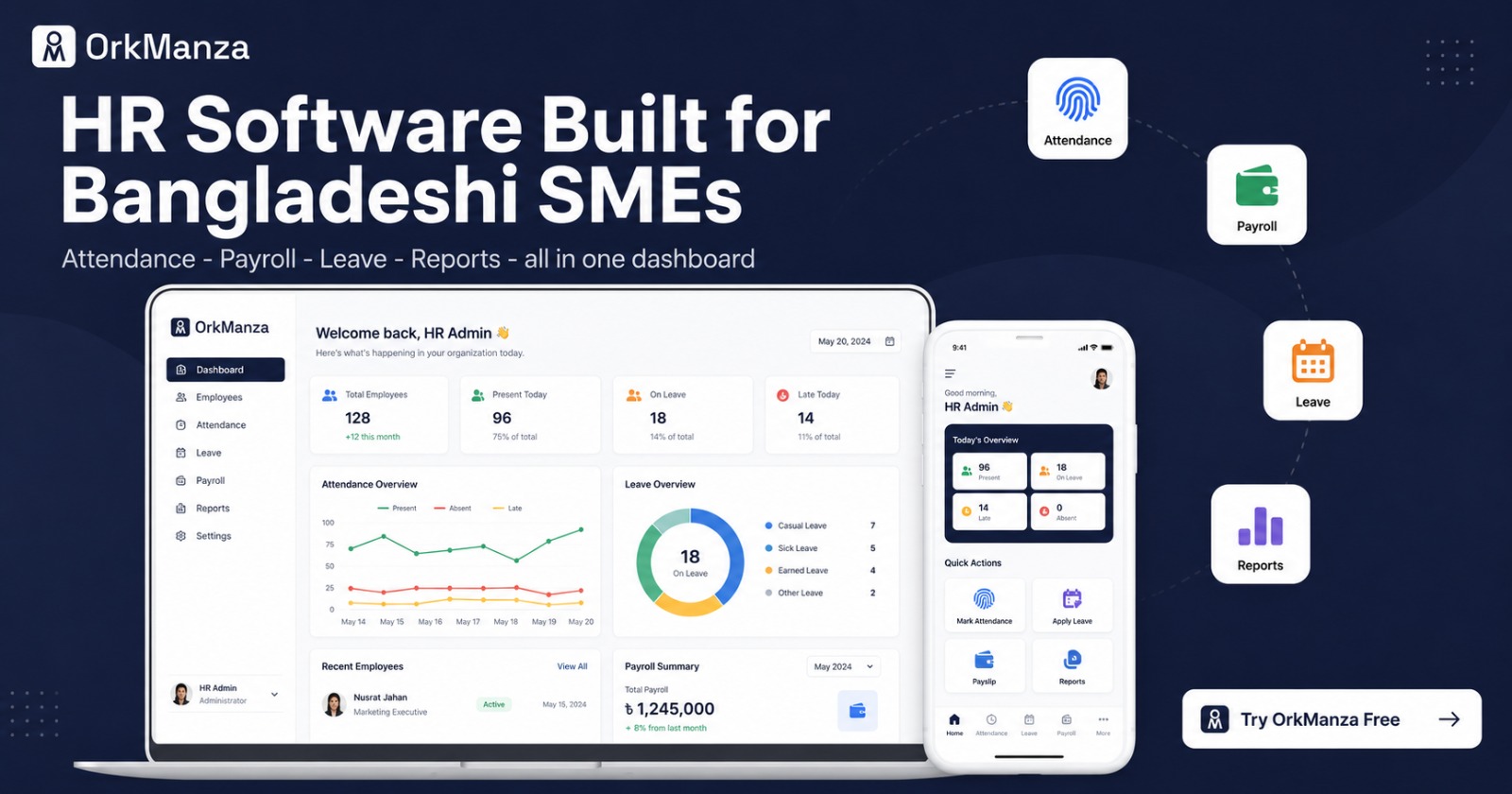
OrkManza is a cloud-based HR and payroll platform designed specifically around how Bangladeshi SMEs actually operate. Payroll calculations already account for overtime rules, festival bonus, and income tax the way businesses here need them. You're not building formulas from scratch or hoping a generic international tool understands local compliance.
Some of the capabilities include:
- Automated payroll processing
- Attendance management with biometric integration
- Leave management workflows
- Employee database
- Recruitment management
- KPI and performance tracking
- Employee Self-Service (ESS)
- Mobile accessibility
- Real-time reports and analytics
- Workforce management tools
For example, imagine a retail business with 45 employees across two branches. Without HR software, attendance records from each location may need to be collected manually before payroll can be processed. With an integrated platform like OrkManza, attendance data syncs automatically, payroll calculations are completed more accurately, and managers gain instant access to reports, all from one dashboard.
Conclusion
Choosing HR software isn't simply about replacing spreadsheets; it's about preparing your business for sustainable growth.
If your HR team spends hours calculating payroll, correcting attendance records, managing leave requests through WhatsApp, or searching for employee documents across multiple files, it's probably time to rethink your HR process.
The best HR software for small businesses in Bangladesh should do more than automate routine tasks. It should help you:
- Reduce payroll errors
- Save valuable administrative time.
- Improve attendance accuracy
- Keep employee records organized.
- Simplify leave approvals
- Generate real-time reports
- Support business growth without increasing HR workload.
For startups, SMEs, retail businesses, manufacturers, hospitals, educational institutions, and growing enterprises, investing in the right HR software today can prevent operational challenges as your workforce expands.
Rather than choosing software based solely on price, evaluate the overall value it delivers. Look for a solution that is easy to use, scalable, backed by reliable local support, and designed around the realities of running a business in Bangladesh.
Try OrkManza for Free
Automate HR, attendance, payroll, tasks and more. Track all your key metrics in one powerful platform.